
EdgeFit AI — Definitive Walkthrough
Illustrated technical reference · Version 1.0 · Published November 3, 2026
Why real measurement matters
Choosing the right AI model for an Android device cannot be done from spec sheets alone. Hardware-aware on-device inference selection requires real measurement and validation: platform-reported device capabilities, native benchmark runs, recorded evidence with provenance, and honest separation between measured results and model predictions. EdgeFit AI was built for the Meta Global AI Developer Hackathon 2026 to do exactly that.
Feature overview
- Hardware-aware device profiling and resource readiness
- GGUF model compatibility, staging, and selection
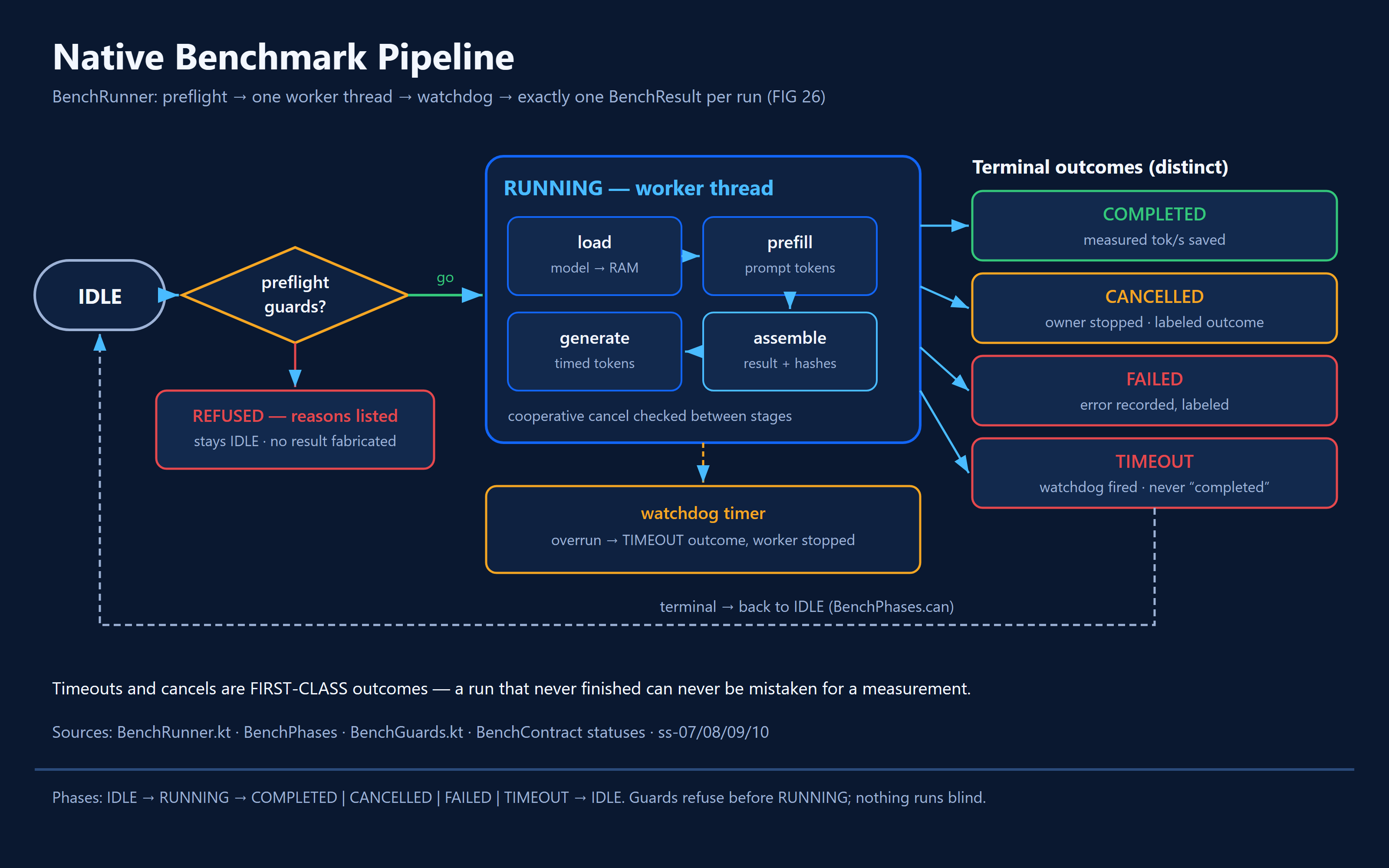
- Native llama.cpp inference measurements (prefill + generation)
- Benchmark configuration, execution, and failure handling
- Sessions with evidence provenance, comparison views, and exports
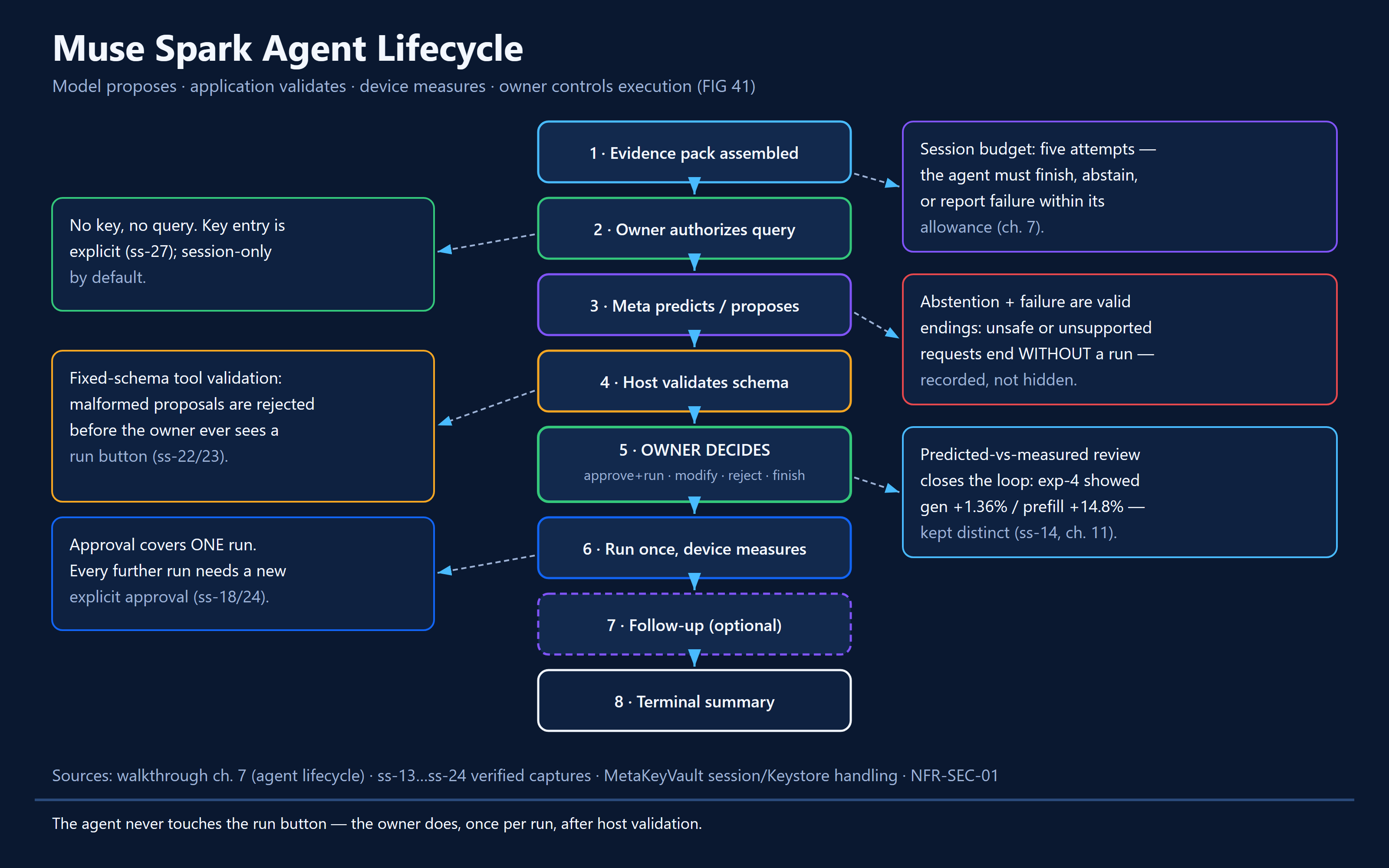
- Meta Muse Spark BYOK integration and bounded agentic optimization
- Owner-controlled proposal approval, modification, and rejection
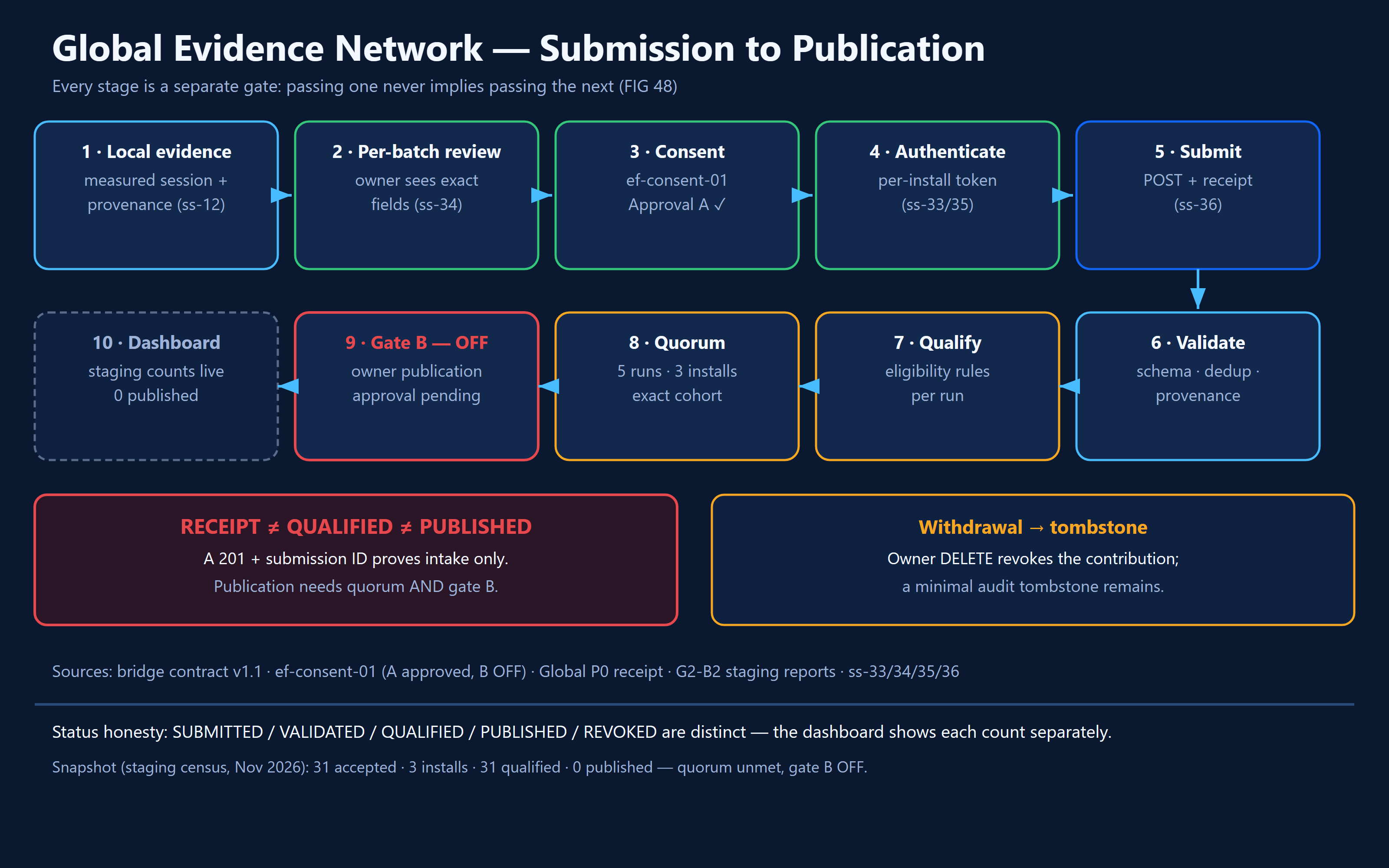
- Global Evidence Network with consent and publication gates
- Privacy, consent, credential custody, and security validation
- Scientific methodology with stated limitations
Technical contents
- Feature Encyclopedia
- Golden Path (guided walkthrough)
- Device Intelligence
- Model Selection
- Benchmarking
- Sessions and Evidence
- Muse Spark Agent
- Security and Validation
- Global Evidence Network
- Installation Safety
- Scientific Methodology
- Distribution and Limitations
- Settings, Onboarding and Help
The full document also includes supporting reference sections, 56 figures (40 genuine screenshots plus 16 technical diagrams), and asset information.
Visual preview
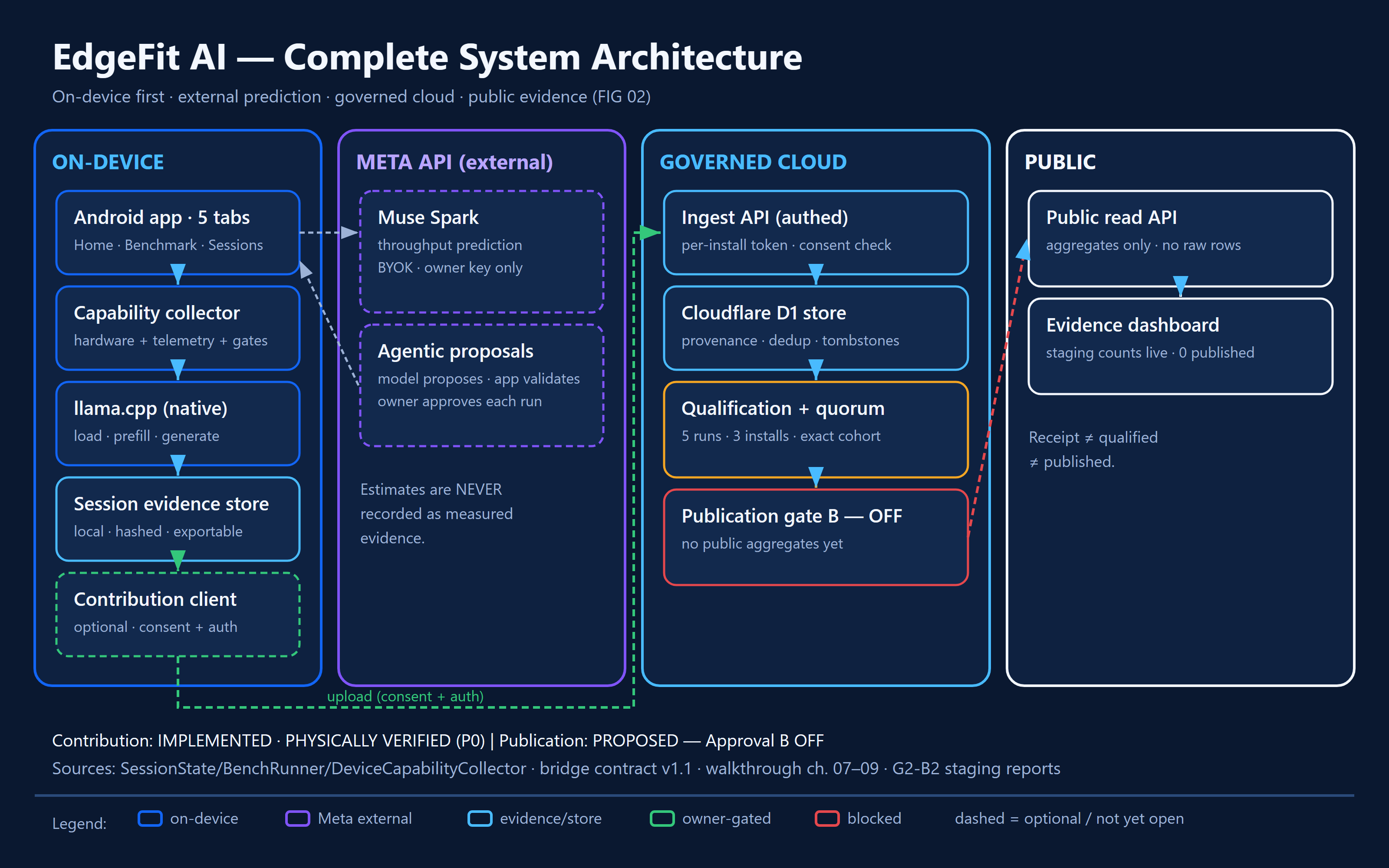
Representative diagrams from the walkthrough. All figures are source-grounded; no interfaces or measurements were fabricated.
Evidence integrity
The walkthrough distinguishes five evidence levels:
- Hardware-reported values — platform APIs on the device.
- Model predictions — Muse Spark estimates, unverified until measured.
- Native measured benchmarks — physical on-device runs with provenance.
- Qualified evidence — validated contributions meeting cohort rules.
- Publicly published aggregates — quorum-satisfied, approval-gated statistics.
A successful submission receipt is not equivalent to qualified or published evidence. Public aggregates require the documented exact-cohort quorum and Publication Approval B.
Download
PDF: 65 pages, searchable, 15,488,140 bytes.
SHA-256: EDE2B52DF9BA04EE0AF403B4946A9B5684519B6E53D3B2DAFE60F07DC5CA4B87
Version and limitations
Version 1.0, published November 3, 2026. Four screenshot slots remain reserved for three missing subjects: a real error/refusal screen, JSON evidence export, and contribution history/withdrawal. These are accepted v1.0 limitations and are not presented as already documented.